Project Details
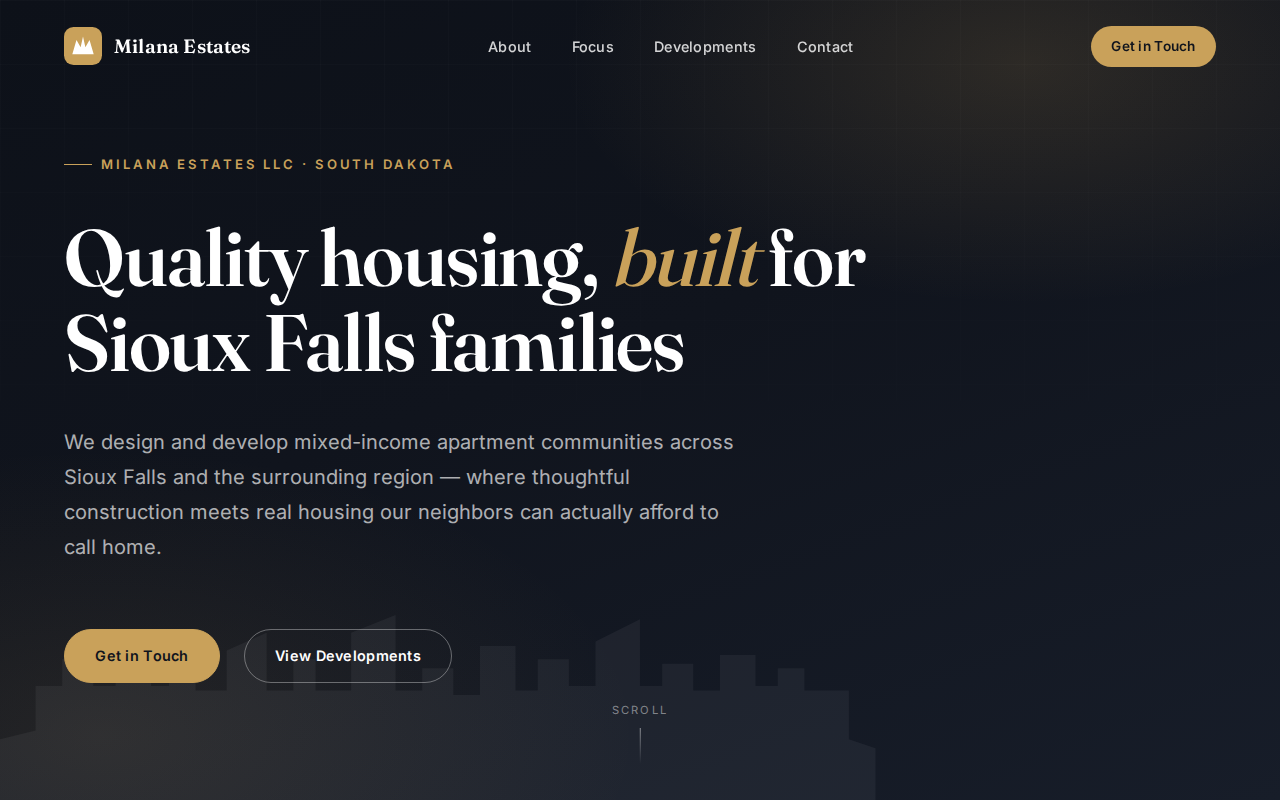
Built for Milana Estates, a real-estate development firm.
The problem
Evaluating whether a specific piece of land or building is worth developing means pulling together a lot of disconnected information before you can even start a real financial model: zoning and land-use rules, recent comparable sales and rents, population and income growth trends for the surrounding area, and, for affordable-housing-adjacent projects, the comparable data that financing programs actually look at. Normally that’s a slow, manual research pass per site, repeated from scratch every time a new address comes up.
The brief was to compress that research pass into something close to instant: paste in an address, get back a real, defensible read on whether it’s worth pursuing, backed by real public data rather than a guess.
What was built
A web tool (Flask backend, an interactive map-based front end) that takes an address or a map selection and produces:
- Zoning and regulatory context pulled live from the relevant jurisdiction’s own public GIS/planning data. Not a static lookup table, because zoning rules and boundaries genuinely differ by county and change over time.
- Growth and demographic indicators for the surrounding area, to answer “is this a place people and businesses are actually moving toward.”
- Comparable financing data for affordable-housing-adjacent projects (a LIHTC-comparables path), since that program’s numbers are a different shape of data than a standard market comp.
- Broker listing aggregation and search autocomplete, so a candidate site doesn’t have to be typed in perfectly to start.
- A client-ready PDF report: the actual deliverable a developer takes into a financing conversation, not just a screen of numbers.
Technology choices, and why
Aggregating public data sources rather than one paid API. Zoning, demographic, and comparable-sales data don’t live in one place with one clean API. They’re spread across county, state, and federal sources with different formats and reliability. The system pulls from several of these and reconciles them, rather than depending on a single commercial data vendor whose coverage or pricing could change the tool’s viability overnight.
Nationwide by design, not by accident. The regulatory/data-lookup engine was deliberately re-tested against markets far outside where it was first built and used (geographically distant metro areas on opposite coasts), specifically to catch “it only actually works near home” bugs before they became a real limitation on which markets the tool could be trusted in.
PDF as the deliverable, not the dashboard. A developer takes a report into a lender or partner conversation; a live dashboard doesn’t travel well into that meeting. The report generator was built as a first-class part of the system rather than an afterthought export button.
Where it stands
A production tool in daily use for Milana Estates, on a deliberate, phased roadmap toward a multi-customer product: white-label web for developers and brokers, or a subscription mobile app. Phase 0 is underway, building the shared groundwork both paths need (packaging, dependency hygiene, a real multi-tenant and auth story) so the product decision gets made from evidence instead of guesswork.